Showing posts with label mitigation. Show all posts

Sunday, 3 September 2017

We need to talk about a geo-intervention

Photo NASA: Filament Eruption Creates 'Canyon of Fire' on the Sun

There was a time to work on (the technologies for) reducing emissions of greenhouse gasses (mitigation), now is the time we also need to work on adaptation and now is the time we need to start having a serious conversation about a geo-intervention. The journalistic hook is a new interesting commentary in the scientific journal Nature. It makes the surprising, at least for me, case that a geo-intervention to reduce the insolation will also reduce greenhouse gas concentrations and ocean acidification.

Geo-intervention is the more accurate term for what is commonly called geo-engineering. We cannot engineer the climate, but we may be able to make the climate crisis less harmful. Also our emissions of greenhouse gases are a geo-intervention and by now we cannot even say anymore that it is an unintended intervention. We know what we are doing and are doing it anyway.

The best known geo-intervention is called Solar Radiation Management, that is, a reduction of the amount of sun that is absorbed at the Earth’s surface. This is possible by making the Earth brighter, especially the dark oceans, it may be possible to make clouds brighter or we could install mirrors in space. The most considered Solar Radiation Management method is creating large amounts particles high up in the air in the stratosphere. We know this works, large tropical volcanoes cool the Earth by emitting sulphur dioxide creating small particles in the stratosphere.

Advantages of Solar Radiation Management would be that it is relatively cheap. A medium sized economy like The Netherlands would have to spend a few percent of its gross domestic product to keep the global mean temperature stable. That sounds like a much better deal than having your culture disappear in the waves and more countries will likely be willing to chip in and join such a coalition of the chilling.

The Nature comment makes the interesting case that reducing the warming, will also reduce the concentrations of carbon dioxide in the atmosphere. It would do so as vegetation would take up more carbon dioxide if they are less stressed by the heat. The Arctic would warm less, which would reduce emissions from thawing permafrost. And also humans tend to use less energy when the planet is colder (for example, less air conditioning). Compared to other methods to remove carbon dioxide from the atmosphere solar radiation management is cheap.


Disadvantages are that this would hurt the ozone layer in the stratosphere. Volcanoes use sulphuric dioxide for their Solar Radiation Management, this would make acid rain worse. However, there is ongoing research on alternative particles and hopefully acid rain becomes better anyway due to the energy transition away from burning fossil fuels, which emits sulphuric dioxide in the troposphere where we live. In the dry stratosphere the particles are not removed as fast (for example due to precipitation) as in the troposphere. So we would need much less sulphuric dioxide emissions to cool the planet in the stratosphere than in the troposphere.

Solar Radiation Management can also not stop all climatic changes. Global warming due to greenhouse gases will mostly warm the Arctic (polar amplification), while solar radiation management would mostly cool the tropics where the sun is the strongest. Thus the temperature difference between equator and pole would become smaller and the circulation and water cycle would still change (although probably less).

The Nature comment argues that we should also talk about using Solar Radiation Management to partially offset global warming. Most studies look at bringing the temperature down to pre-industrial levels, but we could also make smaller reductions. For example, we could stabilise the temperature in the tropics. Then the rest of the planet would still warm, but the impacts in poor and thus vulnerable countries would then be reduced.

Goe-interventions are typically accompanied by academic debates about global governance of such a system. We have seen how good that works for the original problem, geo-engineering by carbon dioxide. In case of carbon dioxide the response has been limited by the people willing to take the largest risks with other people's lives and property. (Hopefully economic forces will now block them.) The only possible climate treaty was one without any obligations beyond reporting back. Still the incompetent president of the historically largest polluter said fuck you to the entire world for no other reason than the pleasure of saying Fuck You!

Similarly the coolest coalition of the chilling will set the temperature. If the hotheads do not like that, I am sure the reasonable cool people will be willing to talk, if the talks are also about carbon dioxide emissions.


We would have to keep on managing the insolation for millennia or until someone finds a cheap way to remove carbon dioxide from the air. The largest danger is thus that humanity gets into trouble over these millennia and would no longer be able to keep the program up, the temperature would jump up quickly and make the trouble even worse. Looking back at our history since Christ was born and especially the last century, it seems likely that we will be in trouble once in a while over such a long period.

This danger could also be an advantage, just as the mutual assured destruction (MAD) with nuclear arms brought us a period of relative peace, the automatic triggering of Mad Max would force humanity to behave somewhat sensibly and make people who love war less influential.

My impression is that the main objection from scientists against geo-interventions is their worry about creating such an automatically triggered doomsday machine. Those people seem to think of a scenario without mitigation, where we would have to do more and more Solar Radiation Management. While carbon dioxide accumulates in the atmosphere over millennia, the stratospheric particles (after a volcanoes) are removed after a few years. So we would need to keep adding them to the stratosphere and if we do not reduce greenhouse gas emissions increasingly many particles.


I do not think humanity will forgo mitigation, but we will likely be too slow. My expectation is that we will stabilise the temperature, but after quite a lot of warming. Renewable energy is getting very cheap and still rapidly declining in price. Also batteries are declining in price. Thus I would see the energy transition as unstoppable for electrical power and private transport. That would break the political power of the fossil fuel industry and then make the rest of the transition (heating and industrial processes) a lot easier.

About 20 percent of historical warming is due to methane, which is mostly due to animal husbandry (read burping cows) and rice paddies. The residence time of methane is about a decade. It thus accumulates thus much less than carbon dioxide and would be something we could fight with a modest and importantly stable amount of Solar Radiation Management. Hopeful was a recent study that feeding cows seaweed reduces their methane emissions almost to zero. (There are many other ethical and environmental problems with industrial agriculture, but the global warming part of it would then be solved.)


Thus I expect us to stabilise the climate, but at a level that will be harmful. If we stabilise at 3°C of warming, would it not be better to reduce the warming to 2°C, 1.5°C, or our current 1°C. The internationally agreed upon 1.5 and 2°C levels are not "safe" levels, below them there are clear damages (and above them the word will not suddenly end).

There are scientific justifications for the 2°C level, for example looking at some tipping points in the climate system, but this level is not set by science. In the end it is a political compromise between the risks of climate change and political difficulty of changing the energy system. As a Dutch person, my compromise is to go back to the old temperature. Also if the warming would stop now immediately, sea level rise would continue for millennia.

The question is not whether it would be nicer not to have climate change, but whether a geo-intervention can improve the situation. Some worry that a geo-intervention would reduce the pressure to reduce greenhouse gas emissions. In a rational world that may partially be the case, although a geo-intervention would not stop the market forces moving us to renewable energy. In the real, not rational, world it may well do the opposite.


Most people like to see the world become a better place, some for all, some for a large group they identify with, some for their community, some for their family. That may make these people blind for the possibility that some do not mind if their own situation becomes worse, as long as it becomes even worse for others and relatively they “win”. Let’s call these people supremacists or fascists.

The term supremacy or Trump’s slogan “America first” is already a hint that these people want to be on top, it does not say that the top is a nicer place, it is a relative measure. When the Second World War still went "well" for the Nazi’s, they were on top, but the suffering was enormous, less so, but also for the Germans. The Nazi’s did not care, for them war and violence is a natural state. They call normal people “Good people”, seeing themselves as bad people, as people who enjoy bringing about suffering of humans they perceive as less valuable. America’s white supremacists dream of a race war, which will also bring a lot of suffering on the people they claim to love.

When these people hear Greenpeace argue that vulnerable people will suffer most from climate change, it would make sense that they like this and want more of this. It is not possible to convince these people that climate change is real, they already accept it is real, they only claim they do not. The best way to get more climate change is to claim that you do not accept the science of climate change. That way you can also convince some conservatives who do not like to see others suffering, but are naturally sceptical of any claim that powerful corporations can do something wrong and trust their politicians who work for the fossil fuel companies (campaign contributions, cosy jobs afterwards).

I think the fascists are stupid to listen to Greenpeace. Yes, more people will die in poor countries, that means they will have more kids and multiply faster. Living in a harsh environment makes you flexible and strong. Our power and pampered life style is based on a fragile just-in-time economy, where everything is optimised and thus every change produces damages. Where a mid-sized bank going bust can produce a decade long recession. If civilisation goes down, the poor will have the more useful skills.

The mitigation sceptical movement seems to be against all types of geo-intervention, except for emitting greenhouse gases. Reading between the lines when they complain that scientists spread too much fear, one almost gets the impression they fear climate change more than most. That could be because they are fighting to make the worst case scenario happen and expect to be “successful”.

The fascists among them would hate it when geo-interventions would make their life’s work mostly futile. If they are no longer fighting for a bad world that would make the transition again a lot easier.

Hopefully they will move on to lie about other stuff, preferably claims that are easily checkable, like the size of inaugurations. (It is a sad state of affairs, that I thought is was worthwhile to add a link.)


Let me end this post with a And-Then-There's-Physics-style last paragraph. I know a little about the quality of climate data, but this post is just written as a participant in the climate debate. As far as I can judge nearly all scientists worry about geo-interventions and many do not even like doing research on it. So even if pro-intervention people are very present in the media, I am an outlier. Feel free to point out my thinking mistakes and alternative solutions.

Related reading

Do dissenters like climate change?

Nature commentary: solar geoengineering reduces atmospneric carbon burden. (Open Access with this link.)

Gernot Wagner co-author of the book Climate Shock: It's time to take solar geoengineering seriously, even though it seems outlandish.

Raymond T. Pierrehumbert in The Bulletin of Atomic Scientists The trouble with geoengineers “hacking the planet”.

Reto Knutti, Joeri Rogelj, Jan Sedláček & Erich M. Fischer, 2016: A scientific critique of the two-degree climate change target. (pay-walled)

Frieler, K., Mengel, M., and Levermann, A.: Delaying future sea-level rise by storing water in Antarctica, Earth Syst. Dynam., 7, 203-210, doi: 10.5194/esd-7-203-2016, 2016.


* Top photo by NASA, Filament Eruption Creates 'Canyon of Fire' on the Sun used with a Creative Commons Attribution 2.0 Generic (CC BY 2.0) license.

Photo of thawing permafrost by NPS Climate Change Response used with a Creative Commons Attribution 2.0 Generic (CC BY 2.0) license.

Photo Collecting salt under desert sun by Armando G Alonso used with a Creative Commons Attribution-NonCommercial 2.0 Generic (CC BY-NC 2.0) license.

Photo of a strong African lady Use No Hooks by Michał Huniewicz used with a Creative Commons Attribution 2.0 Generic (CC BY 2.0) license.


Sunday, 3 May 2015

Gavin Schmidt, welcome to Hamburg


Neglecting to monitor the harm done to nature and the environmental impact of our decisions is only the most striking sign of a disregard for the message contained in the structures of nature itself.
Pope Francis


Bad Astronomer is mad:
A passel of anti-science global warming denying GOP [USA Republican party] representatives have put together a funding authorization bill for NASA that at best cuts more than $300 million from the agency’s current Earth science budget. At worst? More than $500 million. ... The authorization bill passed along party lines (19 Republicans to 15 Democrats).
Bad Astronomer also reported that last year the Republicans shifted the climate research funding for NOAA towards weather prediction.

John Timmer of Ars Technica adds:
The bill comes a week after the same committee reauthorized the America COMPETES act, which includes funding for the National Science Foundation and Department of Energy. As at NASA, geoscience funding takes a hit, down 12 percent at the NSF, with environmental research from the DOE taking a 10 percent hit.

There seems to be a pattern.

One wonders if they know what they are doing.

I would personally interpret a reduction in the budget for climate research as claiming: the science is settled. If these Republicans were sceptical about climate science, they would want to fund research to find the reason for the misunderstanding. The consensus of 97% of climate scientists, myself included, that global warming is happening, is caused by us and will continue if we do not do something, will not go away by itself. That will require research, arguments, evidence. In this light it would make sense when Democrats would shift science funding from climate research to climate solution, but they may realise that there are more considerations.

It also goes against the motto of the mitigation sceptics that we should help ourselves and adapt to climate change, rather than to reduce greenhouse gas emissions. Because then we should know what to adapt to.

When it comes to the relationship between greenhouse gasses and global mean temperature, our understanding of climate change is pretty solid. Not perfect, science never is, but pretty solid. For adaptation, however, you need local information; global means are not enough. That is a lot harder, that requires that all the changes in the circulation of the oceans and the atmosphere are rightly predicted. It likely depends on aerosol concentrations (small atmospheric particles), on changes in the vegetation, water tables, sea ice.

Many impacts of climate change will be due to severe and extreme weather. Sea level rise, for example, endangers low lying regions, but the sea dikes will breach on a stormy day, thus you also need to know how storms change. Thus for adaptation you do not only need to know the annual or decadal average temperature, you need to know the changes in atmospheric events that happen on short time scales. From minutes to days for severe weather, from weeks to months for heat waves and droughts. This is hard for the same reasons why predicting local changes is hard.

It is not enough to know what happens to temperature, while especially precipitation and storms are very hard to predict accurately. They are, however, very important for agriculture, infrastructure, flood prevention, dikes, and landslides. When it comes to infrastructure or long term private investments, we would need to know such changes decades in advance. Alternatively, you could "adapt" to any possible change, but that is very expensive.

This is the kind of detail we need to prepare our communities to adapt to climate change. This is hard and very much ongoing research. If you are taking the bet that adaptation is enough, it does not seem wise to leave the American public unprepared.

Earth observation is also much more than climate. The same satellites, the same understanding of these measurements and deriving information products from them are used in meteorology. One of the main reason why casualties due to severe weather are decreasing is because of good weather predictions, we see the bad weather coming and can respond in time. Good weather predictions start with a good description of the state of the atmosphere at the start of the weather prediction (called [[data assimilation]]). More computer power, better models, better assimilation methods and detailed global Earth observations are responsible for the improved modern weather predictions. My guess would be that the better observations are easily responsible for half of the improvements. While I work on ground-based measurements, I must admit that for accurate weather predictions beyond one or two days the global overview of satellites is essential.

Other applications of Earth observations:
- assisting wildfire managers in wildfire recovery
- supplying farmers with knowledge about when to grow which crops and where
- drought/famine prediction
- the effects of deforestation and natural disasters (such as landslides, earthquakes, hurricanes, etc.) on local communities and surrounding ecosystems
Earth observation is also important to organize the rescue work after catastrophes. Think Hurricane Katrina.


The funding reductions also give the impression that climatologists are punished for their politically inconvenient message. Maybe these Republicans think that they can influence the state of the science by beating scientists in submission. This will not work. Science is not organised like a think tank, which are there to write any bunk that the big boss wants written.

Science is a free market of ideas. Like the free market uses distributed information on how to efficiently organize an economy, science is highly distributed and cannot be controlled from the top. Every researcher is a small entrepreneur, trying to search for problems that are interesting and solvable. Science is organised in small groups. If your group does not function, you'd better get out before your reputation and publication record suffer. Multiple such groups are at one university or research institute. In one country you will find many universities and institutes. All these groups in many countries are all competing and collaborating with each other. Competing for the best ideas, because it is fun and get more possibilities to do research. The currency is reputation.

Your articles are peer reviewed by several anonymous colleagues selected by a journal editor, research proposals are reviewed by several senior anonymous colleagues selected by the funding agency, the university groups and institutes are regularly reviewed by groups of senior scientists. You are competing to be able to collaborate with better groups. This web of competitive and collaborative relations is designed to get the best ideas to float up and to make it hard to apply pressure top down. Add to this researchers who are fiercely independent, intrinsically motivated and do science because they want to challenge themselves, understand the world and measure themselves with the best. At least the majority of people starting with research is intrinsically motivated. The climate "debate" gives the impression that for some the joy of science fades with age.

Even if it would be better for American scientists to shut up and spread Republican propaganda, no one could enforce that, while there are strong enforcement mechanisms for the quality of science. I am sure that most American scientists that would be pressured by the Republicans would still stick to the truth. You get into science because you want to understand reality. Scientists accept low pay and bad labour conditions to do so. If they are no longer allowed to tell the truth, I would expect most scientists to move to another group, to another country or simply to stop.


Punishing scientists for their inconvenient message also send a bad signal to the world. A country with a government meddling in the results of scientific research is not attractive. A large part of the scientists in America come from abroad. New high potentials may now think twice before they go to America.

Researchers may go to my birth country (The Netherlands) or home country (Germany)instead. They have freedom of science and research in their constitutions. In both countries you only need English to do your work and nowadays you can also get by in daily life with English (although I would still advice to learn the local language for better social integration). For Germany I know that we are always looking for good scientists. Too little students start studying meteorology to fill the vacancies. They even took me as a physicist because they could not get any better.

In the 17th century, when in most of Europe's rulers did not tolerate deviating thoughts, The Netherlands was a haven of tolerance and experienced a golden century. This little country attracted an enormous influx of the best scholars, scientists and artists from all over Europe, introduced many free market innovations, became a world power. Before and during the Second World War many Jewish and German scientists migrated to America because of the repression in Europe. This has kick started American science. The repression of scientific freedom has real economic and cultural consequences.

One wonders if they know what they are doing. The GOP representative, that is. They almost unanimously have trouble accepting that we are responsible to (almost) all the warming seen in the last century. The normal Republicans (except for the Tea Party) fit into the American mainstream when it comes to accepting that climate change is real. The very vocal mitigation sceptics on the net that give America a bad name abroad only represent a few percent of the population. One wonders when these normal people tell their politicians to get their act together.

In the realm of climate research, my guess would be that Europe is already a little stronger than the USA. The aggressive mitigation sceptics to do not make America more attractive. The FOIA harassment in response to inconvenient science does not make America more attractive. When the political radicals are determined to hurt American interests and pass this bill, I would like to invite Gavin Schmidt to Germany. In am sure the Max Planck Institute in Hamburg would be interested. The Max Planck Foundation was specially founded to attract the best researchers from all over the world by providing them with a lot of freedom of research. After all, top researchers know best what is important for science. Gavin welcome to Hamburg, your [[ICE]] is waiting.


Related reading

Phil Plait (Bad Astronomy blog): House GOP Wants to Eviscerate NASA Earth Sciences in New Budget

Elizabeth Kolbert in The New Yorker: The G.O.P.’s War on Science Gets Worse. "Ignoring a problem does often make it more difficult to solve. And that, you have to assume, in a perverse way, is the goal here."

Discover: House GOP to Humanity on Global Warming: Put on This Blindfold and Keep Marching

John Timmer of Ars Technica: House Science Committee guts NASA Earth sciences budget

Stop all harassment of all scientists now

Peer review helps fringe ideas gain credibility

The value of peer review for science and the press

The Tea Party consensus on man-made global warming

Do dissenters like climate change?

Climate myths translated into econ talk


* Photo at the top of Alster by André H. (An der Alster) [CC BY 2.0], via Wikimedia Commons
* Photo of St. Pauli by Heidas is licensed under the Creative Commons Attribution-Share Alike 3.0 Unported license.
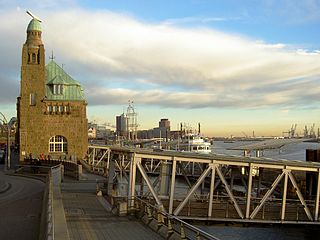
* Photo of Altonaer Balkon in Hamburg by Udo Herzog (http://flickr.com/photos/udo/142872336/) [CC BY 2.0], via Wikimedia Commons
* Photo of Jenisch by Wolfram Gothe (Transferred from de.wikipedia) [Public domain], from Wikimedia Commons
* Photo of the main station of Hamburg by Thomas Fries / Lizenz: CC-BY-SA-3.0

Sunday, 9 December 2012

Changing the political dynamics of greenhouse gas reductions


Photo by Caveman Chuck Coker
, Creative Commons by-nd licence


Another climate conference failed miserably. Maybe we need a completely different system, a system in which forerunners are rewarded and not punished.

A stable, predictable climate is a common good. Climate change is one of the most difficult tragedies of the commons. There are great benefits to using energy and the climate costs are spread almost perfectly to everyone. No single industry or country contributes much to the problem, but some industries and countries do benefit strongly and have a large incentive to halt the negotiations and to spread doubt. This makes greenhouse gas mitigation arguably the most difficult tragedy of the commons.

It is possible to solve such tragedies, the Montreal protocol to curb emissions of chlorofluorocarbons (CFC) to protect the ozone layer seems to work well. The ozone layer is now at its thinnest, but scientists expect that is will start to become thicker soon and return to almost normal levels in several decades. However, in case of the Montreal protocol only the producers of fridges, air conditionings and spray cans were affected. Greenhouse gasses are emitted by the energy, agricultural and building sectors. These are powerful parties and this makes a global treaty difficult. Maybe it is better to solve the tragedy of the commons by allowing countries and regions that want to reduce their CO2 emissions to protect themselves against unfair competition.